Rugby League World Cup Heads to America: 2030 Tournament Set for Pacific-USA as Tonga and Samoa Near Tier 1 Status
The 2030 Rugby League World Cup will be staged across the Pacific and the United States in a new Magic Round format, the International Rugby League has announced, with the men's tournament expanding to 12 teams and Tonga and Samoa in line for promotion to Tier 1 status.
By Mohammad Samir · November 9, 2026
Rugby league is going to America. On Monday morning in Sydney, on the eve of the 2026 World Cup finals in Brisbane, International Rugby League chair Troy Grant announced that the 2030 men's and women's World Cups will be staged across the Pacific and the United States — the first time the tournament has ever been held in North America — and the sport's biggest event will look very different when it gets there.
The headline change is the format. The 2030 tournament will be played as a travelling roadshow, a Magic Round model in which the whole competition descends on a new host city each week. Five cities will share the five-week tournament: three pool rounds plus the semi-finals and final, each staged in a different place. The five host cities have not been confirmed yet, but Hawaii and western American cities such as Las Vegas and Salt Lake City are early contenders — not least because of the large Pacific Island communities that call those places home.
There will be more teams, too. The men's tournament grows from 10 nations to 12, and the women's from eight to 10, reversing the shrinkage of the 2026 edition, which was cut back for commercial reasons. The wheelchair tournament will run at the same time, with France the favourites to host it, and Grant confirmed that the 2034 World Cup will follow a similar model in Europe. The Australian Rugby League Commission, which Grant credited with running the most successful World Cup since the concept began in 1954, will organise the 2030 event alongside the IRL.
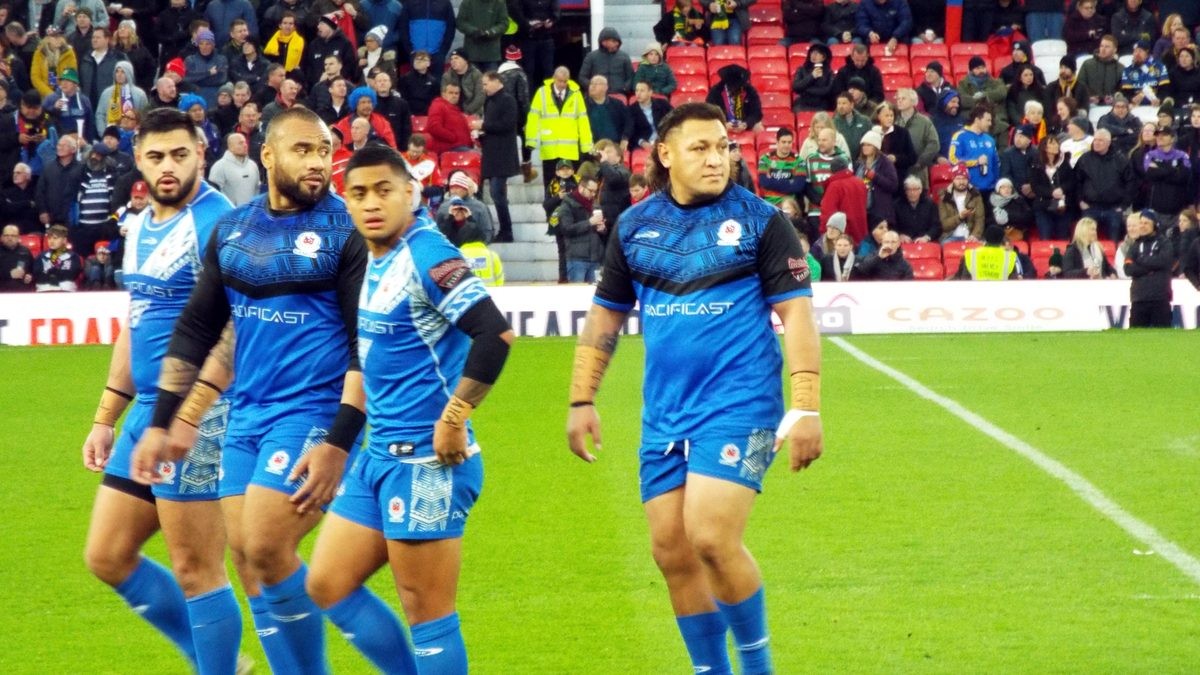
But the announcement that will echo longest may be the one about Tonga and Samoa. The IRL board has voted unanimously to begin discussions on elevating both Pacific nations from Tier 2 to Tier 1 status, joining Australia, England and New Zealand at the top table. The recognition is earned, not gifted: both nations reached the semi-finals of the 2026 tournament, and their rise — on the field and in the stands — has been the story of this World Cup. Grant was careful to stress that the move is subject to consultation with both teams. "The board voted unanimously to engage with Tonga and Samoa on elevating them from Tier 2 to Tier 1 status," he said. "We will be working with them over the next couple of months to ensure there is no unintended consequences from that potential elevation to Tier 1."
The board also approved a change to the eligibility rules that could reshape international rugby league for a generation. Players will now be able to represent a heritage nation if a great-grandparent was born there — the great-grandparent element is new, and it widens the pool for developing teams such as the Pacific Island nations, Lebanon, Greece and Italy, who rely on heritage players to stay competitive while they build homegrown pathways.
One thing the announcement did not do is hand the host nation a free pass. The United States, which last played at a men's World Cup in 2017, will have to qualify for 2030 like everyone else. The ARLC is shouldering the financial risk of the tournament, and there are no guarantees beyond the stage itself. That is the gamble, and the opportunity: a World Cup played in front of American crowds, in cities with deep Pacific roots, with Tonga and Samoa finally recognised as equals. Four years out, rugby league has just drawn its boldest map yet.