Rain Wrecks São Paulo Qualifying as Interlagos Drowns After Two Minutes
It took two minutes and twenty-three seconds for the São Paulo Grand Prix weekend to come apart.
By Mohammad Samir · November 7, 2026
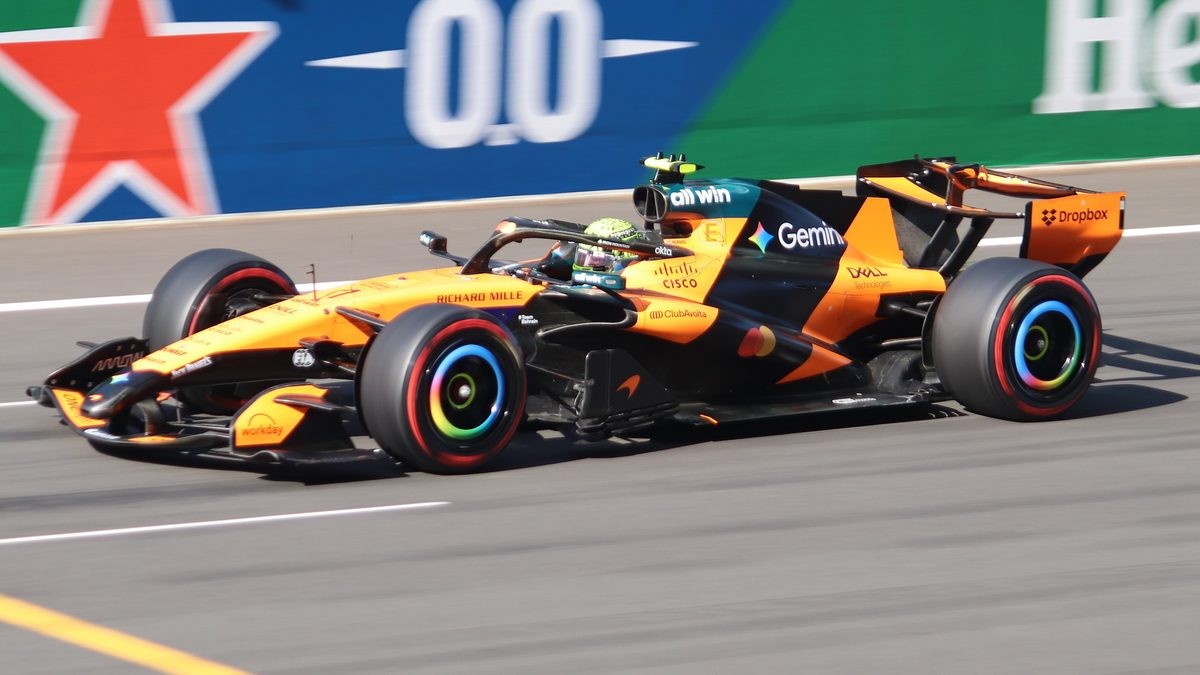
It took two minutes and twenty-three seconds for the São Paulo Grand Prix weekend to come apart. Qualifying had barely begun at Interlagos on Saturday afternoon when the sky opened, the track disappeared under standing water, and race control had no choice but to throw the red flag. Not a single driver had set a competitive lap time. Rain had been forecast all day, but the violence of it still caught everyone out. Eight cars rolled out on intermediate tyres — Kimi Antonelli and George Russell for Mercedes, Charles Leclerc's Ferrari, Isack Hadjar's Red Bull, both Alpines, Fernando Alonso's Aston Martin and Valtteri Bottas's Cadillac — and within seconds it was obvious the circuit was not driveable. Replays showed Lando Norris nearly losing his McLaren altogether, while Antonelli and Hadjar could only laugh at how hopeless the conditions were. Gabriel Bortoleto summed up the mood over the radio: "When I get out, I need to change my clothes, I'm completely wet!" The two men with the most experience of Interlagos weather never left the garage. Max Verstappen and Lewis Hamilton stayed dry, a piece of judgement that looked wiser by the minute — and both already had reasons not to gamble, with Verstappen facing a back-of-the-grid start and Hamilton a ten-place drop for power-unit changes. Leclerc carries a ten-place penalty of his own. The FIA said it expected the worst of the rain to last about ten minutes, after which the medical car would go out to judge the standing water. That was the theory. The reality was messier. Around thirty-five minutes after the scheduled start the safety car finally emerged for recon laps, drivers suited up and climbed back into their cars — and then another band of rain rolled in and they climbed straight back out again. A later inspection settled nothing. "It's very simple to say it's not drivable, it's too dangerous," Maylander told F1 TV. "A lot of standing water in some parts, even on the straights, that creates a high speed aqua-planing. Hopefully the rain will be less and then we try again." The problem was never just the rain falling. It was the water sitting on the asphalt, particularly through Turns 2 and 3 and the stretch from Turn 4 to Turn 5, where Maylander said the aquaplaning risk was critical. Marshals worked the corners trying to clear it, but Interlagos in a downpour has a way of defeating brooms and sweepers alike. This is a circuit with history here: the place has swallowed qualifying sessions before, and the light was already fading under the heavy cloud. What happens next is genuinely uncertain, and the stakes are high. If the session cannot be run at all, Formula 1's rules now state the grid will be set by the drivers' championship classification — a lottery nobody wants deciding a race in the middle of a title fight. The alternative is squeezing qualifying into Sunday morning before the race, a fix the sport has used before but one that leaves teams with almost no time to repair damage or rethink strategy. Either way, Saturday's story is the weather winning. Norris topped Friday's running and his McLaren arrives with a new upgrade package, but none of that mattered once the rain came down. The cars sat in the garages, the drivers sat in their cockpits waiting, and Interlagos did what Interlagos does.